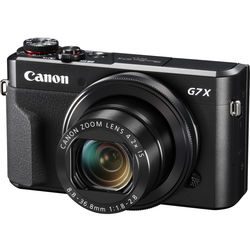
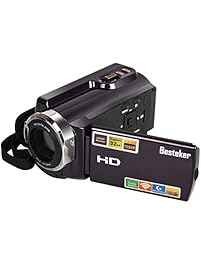
I personally wouldn't use the camcorder because you Can't take pictures and I also need shallow depth of field,plus With a dslr you can change the lenses
but Camcorders, on the other hand, tend to be simpler to use, more comfortable to shoot handheld and offer long recording times
Dslr Camera is the way to go in my opinion tho
A frame of video is technically a picture. There is a reason they use to call cinema "motion pictures".
A DSLR actually gets a way higher resolution with stills over video because video is a secondary feature. They're primarily designed as picture cameras. That's why the internal microphone is always horrible & in productions it's at best used as "reference audio" for a second system audio set up.
But the budget for a camera is horrible for a DSLR. He'd really have to know cameras (I went to film school hence why I know my s**t) to get the best bang for his buck.
That's why I'm suggesting a camcorder because they're primarily designed for video and the audio that is expected to come with video these days. You'll get the best internal microphone with a camercorder as far as the bang for your buck goes. If you don't care about iso pixels then an auto iso camcorder will have you covered in a good amount of lighting situations.
A dslr for $50- $100, your internal microphone audio is going to be garbage (and you're not going to find a dslr with continuous focus for that price. You might be able to find a regular digital picture camera with continuous focus for that price) and you will need to record room tone, isolate the noise profile, then remove it from your whole audio track (so you're going to have to pull your video into the editor, render the whole recording for audio output, load that into audacity, grab your room tone area [which you should grab roomtone for each change of scenery], get the noise profile, select the area of the track for that scene, remove noise tone, & repeat. You will have to do this to salvage your audio because as is it would be reference audio quality to any sort of production).
If you upload as is with internal mic audio on a dslr or digital picture camera, the audio is going to be so unappealing that no one will watch your vlogs. And vlogs are already a pretty captured up market since the production value needed for them is almost non existent.[DOUBLEPOST=1505249047,1505248159][/DOUBLEPOST]Any good production relies on sound design. If you only got $50 to $100 then don't prioritize all of that money going towards the visuals with your rig. Get a camcorder that will have decent audio and will need less salvaging in post. If spend all of your money trying to get the best visuals; it's going to be a pain in the a** dealing with audio in post.
I did a portrait doc on a native council member once. I had second system audio but it had an actual gain dial & a gain dial that just affected previewed audio. I was pretty much 1 man crewing this interview so I messed up. One of the xlr cables was defunct and adding static. I thought I dialed it out and kept it plugged in to kind of assure him everything was going ok. Big mistake, I couldn't use any of the lav audio because the audio file my second system actually mixed together had the static drowning his lav mic.
I was using a really nice camera. I don't even think you could call it a camcorder at that point but it was definitely motion picture oriented.
I pulled up an old gear reservation doc when I was in an event videography class. It was the hmc 150 I had has my main camera on that doc. I also had a canon rebel t5 getting a 2ndary angle for the interview on the subject.
So anyway when I knew my second system audio messed up (which was actually suppose to be the main coverage of audio), I knew I had to salvage this project with the audio my cameras caught.
The canon rebel t5 is like a $350 new DSLR to put this in perspective. The audio was so bad that I couldn't even do the audacity trick of isolating the noise profile & removing it from the whole track. The salvaged audio from that source came out all glitchy'esque sounding. It just wouldn't work.
It was the HMC150's (which I actually did first; I just wanted to see if the DSLR audio would be good for mixing up the sound bites. Since we'd actually cut out a lot of unnecessary dialogue) audio that saved my a**. I was using the internal camera mic on the HMC 150 but the depth of the body definitely allowed the device to keep it's gears away from the mic better. The HMC150 is about $1,800 dollars new (I was loaned one from the school's cage for the weekend. The most expensive camera I shot on is a canon c100 which is currently around $2,500 just for the body but we got them when they were around $5000 for our kits).